Factorio: feed steel with iron plates rather than iron ore
Steel adds another smelting stage to an early Factorio factory. The input is iron plate, not raw iron ore. Build one clearly separated practice handoff so you can see which product belongs in each stage before connecting a larger steel supply.
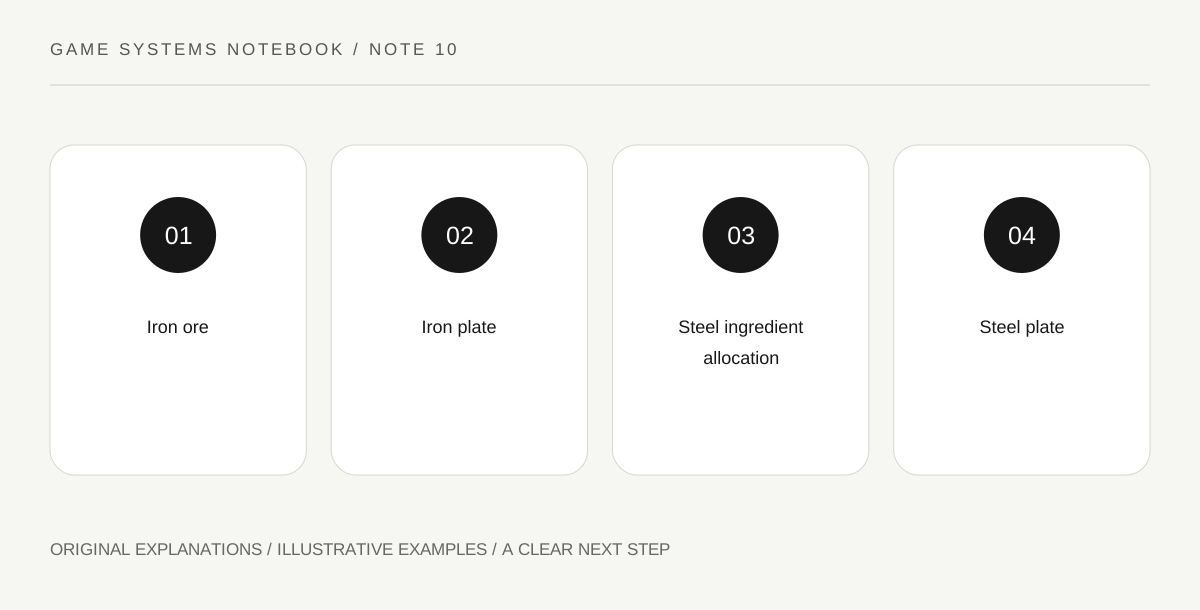
Original explanatory diagram. Read the full method and limitations below.
Read the ordinary recipe chain
In the unmodified base-game recipe used here, five iron plates produce one steel plate. The earlier iron-smelting stage turns iron ore into iron plates. Write the chain as ore to iron plate to steel plate before placing machinery. That simple distinction prevents a familiar furnace sprite from encouraging the assumption that every metal product begins directly with ore in the same machine stage.
Give the steel furnace the right input
Use a suitable furnace and deliver iron plates along with the required energy or fuel for that furnace type. In a small burner-furnace exercise, inspect both the plate input and fuel. Keep the steel output identifiable so it is not confused with the incoming iron. If the wrong item is present or the furnace has no fuel, diagnose that condition rather than expanding the upstream mining operation automatically.
Budget iron allocation before connecting every consumer
Steel consumes iron plates that other recipes may also need. A practice branch can make that competition visible. If you divert an entire iron stream into steel, another part of the factory may lose its input. The recipe ratio alone does not decide how much production you should allocate. Begin with a modest branch and inspect the actual needs of both destinations rather than treating a full steel buffer as the only success measure. Label the reserved branch so its destination remains clear.
Observe a small counted batch
An illustrative batch of twenty-five iron plates contains enough recipe input for five steel plates, before considering any different modded recipe or productivity effect. Use the arithmetic to understand material stages, not to claim a tested rate or time. In your own save, inspect the selected furnace’s status and output. Keep material quantity separate from production speed so the count does not become an unsupported throughput estimate.
Illustrative worked example
Illustrative notebook: A player reserves twenty-five ordinary iron plates for a steel exercise and writes twenty-five divided by five equals five possible steel plates under the stated recipe. They list furnace energy as a separate requirement and keep another iron supply available for existing consumers. The exercise teaches the two-stage material chain and allocation decision without claiming that a particular furnace layout was benchmarked or that every version has identical production modifiers.
Questions that come up
Can I put iron ore directly into the steel stage?
The ordinary base-game steel recipe consumes iron plates. Iron ore belongs to the preceding iron-smelting stage in this guide.
Does five-to-one mean five furnaces per steel furnace?
No. An ingredient count is not automatically a machine-count ratio. Crafting times, furnace speeds and modifiers also matter when calculating a production layout.
References and scope
These sources support the factual background. Examples and exercises are original illustrative teaching material. References do not imply endorsement.
- Official Factorio Wiki: Steel plate — Base-game steel recipe using iron plates.
- Official Factorio Wiki: Stone furnace — Fuel, ingredient and output behavior in basic smelting.